The Myth That a Fuzzy Tennis Ball Is a Fresh Tennis Ball
A fuzzy tennis ball can still play poorly. Learn how felt, pressure, bounce, and pace reveal its condition before you choose it for a session.
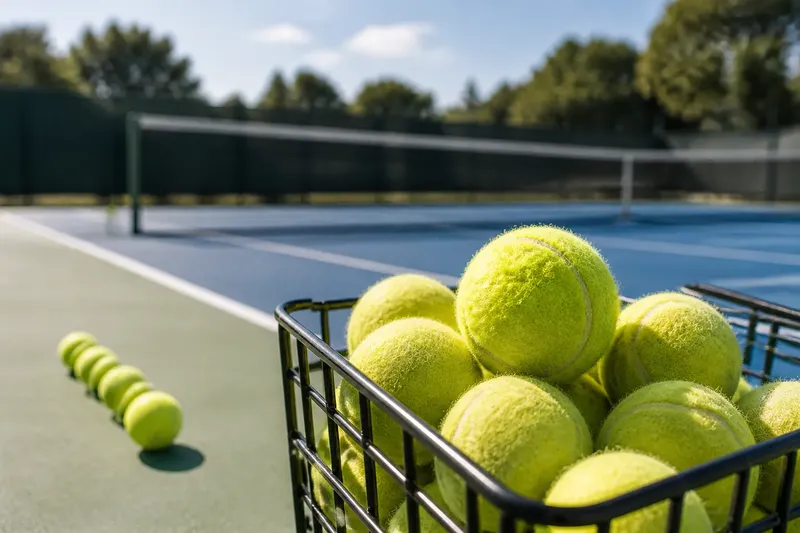
A fuzzy tennis ball is not necessarily a fresh tennis ball. Felt can remain visible after a ball has lost the pressure and lively response that make it play as intended, so appearance alone is a weak guide to condition.
That distinction matters when choosing balls for a match, practice, or a basket of drills. A ball’s visible surface tells you about its cover; the way it rebounds and moves through the air tells you more about how it will behave. Neither clue works perfectly on its own, but together they offer a clearer picture.
What does the fuzz actually tell you?
The fuzzy covering is a woven felt fabric wrapped around the rubber core. It protects the core, affects how the ball travels through the air, and gives players a surface they can grip with their strings. As the ball is used, that felt can flatten, scuff, pick up dirt, or loosen into a shaggy halo.
Those changes are evidence of contact with courts, strings, and ground—not a direct reading of the core’s condition. A ball may look hairy because its felt fibers have lifted, while its rebound has become muted. Another may have a visibly rubbed patch yet still offer a reasonably lively response. Think of felt like the nap on a towel: its texture can change without telling you exactly what is happening inside the material.
Felt condition still matters. A thick, loose nap can catch more air and make a ball seem slower or less clean through a rally. A flattened cover may feel slicker against the strings and offer a different response. But those effects do not turn the cover into a reliable freshness gauge. They describe the surface you see, not the whole ball you play.
Why can a fuzzy ball feel dead?
Most pressurized tennis balls rely on internal air pressure to help them rebound. With use and storage, pressure can decline, even when the outer felt remains conspicuous. The result may be a ball that looks substantial but leaves the strings with less liveliness and produces a lower or less energetic bounce.
Repeated impacts also change a ball’s feel. The rubber core and felt are both stressed during play, and the court surface, weather, and hitting style all shape how quickly a ball seems to lose its preferred response. A ball used for hard, frequent hitting may feel tired sooner than one that has seen lighter play, even if their covers look similar.
Non-pressurized balls are a useful comparison. They rely more on their rubber construction for rebound and can feel different from pressurized balls from the start. Their behavior may remain more consistent over use, but “fresh” still cannot be read from fuzz alone. If you are comparing ball types, judge each against its own intended feel rather than assuming that one visual cue means the same thing for both.
Which signs matter more during play?
Use a few observations together, rather than trying to diagnose a ball from one bounce or one glance:
- Rebound: Does it come back with a lively, predictable response, or does it seem unusually muted?
- Consistency: Do balls from the same can or basket behave alike, or does one feel notably different?
- Flight: Does the ball travel cleanly, or does a heavily fluffed cover seem to slow it in the air?
- Shape: Is it round and intact, without a bulge, split seam, or other obvious deformation?
- Feel at contact: Does it respond as expected for the ball type and court session, or does it feel unusually soft or sluggish?
A bounce check can help, but treat it as a comparison rather than a verdict. Drop balls of the same type onto the same surface from a similar height, then watch for an obvious difference in rebound. The result can be influenced by the floor, the drop, and the ball’s design, so compare like with like and combine the observation with how it feels in play.
Say you open a can for a casual practice session and one ball looks especially fuzzy. If it rebounds similarly to its companions and feels lively off the strings, its appearance alone is no reason to set it aside. If it also gives a noticeably dull response and falls behind the others in a controlled bounce comparison, choosing another ball is a sensible adjustment.
How should you compare balls for your session?
Start by considering what the session needs. A match or structured practice generally benefits from a consistent group of balls, so mixing a lively new ball with a tired one can make timing and rally pace less predictable. For casual drills, a worn ball may still be useful if it behaves consistently enough for the task.
Check the packaging for the intended ball type and court use. Pressure, felt, and construction can differ, so comparing a regular-duty ball with an extra-duty model—or a pressurized ball with a non-pressurized one—may confuse the judgment. If the appropriate choice depends on a product label, manufacturer instructions, or local competition rules, follow those directions.
Storage also affects what you encounter later. Keep balls dry and away from excessive heat, and avoid leaving opened cans exposed when you want to preserve their feel. A sealed can helps maintain the condition of pressurized balls before opening; once opened, the balls begin to share the ordinary wear of use and storage.
What do players often ask about fuzzy tennis balls?
Does more fuzz mean a ball is newer?
No. Raised fibers can make a ball look especially fluffy, but they may also reflect wear or a cover that has become loose. Check its rebound and play response alongside its appearance.
Can a ball look worn but still be playable?
Yes, if it remains round and gives a consistent response suited to the session. A scuffed cover alone does not establish that the core has lost its useful rebound.
How can I tell if a tennis ball has lost pressure?
There is no dependable visual shortcut. Compare its rebound and contact feel with similar balls, while remembering that ball construction and the test surface affect what you observe.
Should I use fuzzy balls for practice?
They can suit casual practice or drills where exact match-like pace is not the goal. For work that depends on consistent timing and bounce, use a group of balls with similar behavior.
What is the better rule for judging freshness?
For a fuzzy tennis ball, treat the felt as one clue, not a freshness label. Look for a sound shape, compare rebound with similar balls, and notice whether its flight and contact feel fit the session. When those signs disagree, prioritize the ball’s actual behavior over how soft or shaggy its cover appears.
That habit also makes decisions more useful: you can reserve consistent balls for play that needs them and keep serviceable, less predictable ones for suitable practice. A ball does not become fresh because its fuzz looks impressive; it earns a place in the session through the response it gives you.